SpinShark UK Guide
UK rules checklist
SpinShark UK Player Guide
 Available in GB
UK readers should start with the UKGC public register, not a bonus banner. SpinShark does not appear as a UKGC-licensed operator in the public business register reviewed for this guide, while the opened official SpinShark terms did not show a general UK account prohibition. For ordinary players, HMRC treats gambling profits as generally outside trading income tax and gambling losses do not receive tax relief. GB gambling rules also create practical limits around credit cards, GAMSTOP, online-slot stakes, remote game design, financial-limit prompts and socially responsible advertising. This page is not legal or tax advice. It is a local checklist to help you decide what to verify before using SpinShark and when to avoid play entirely.
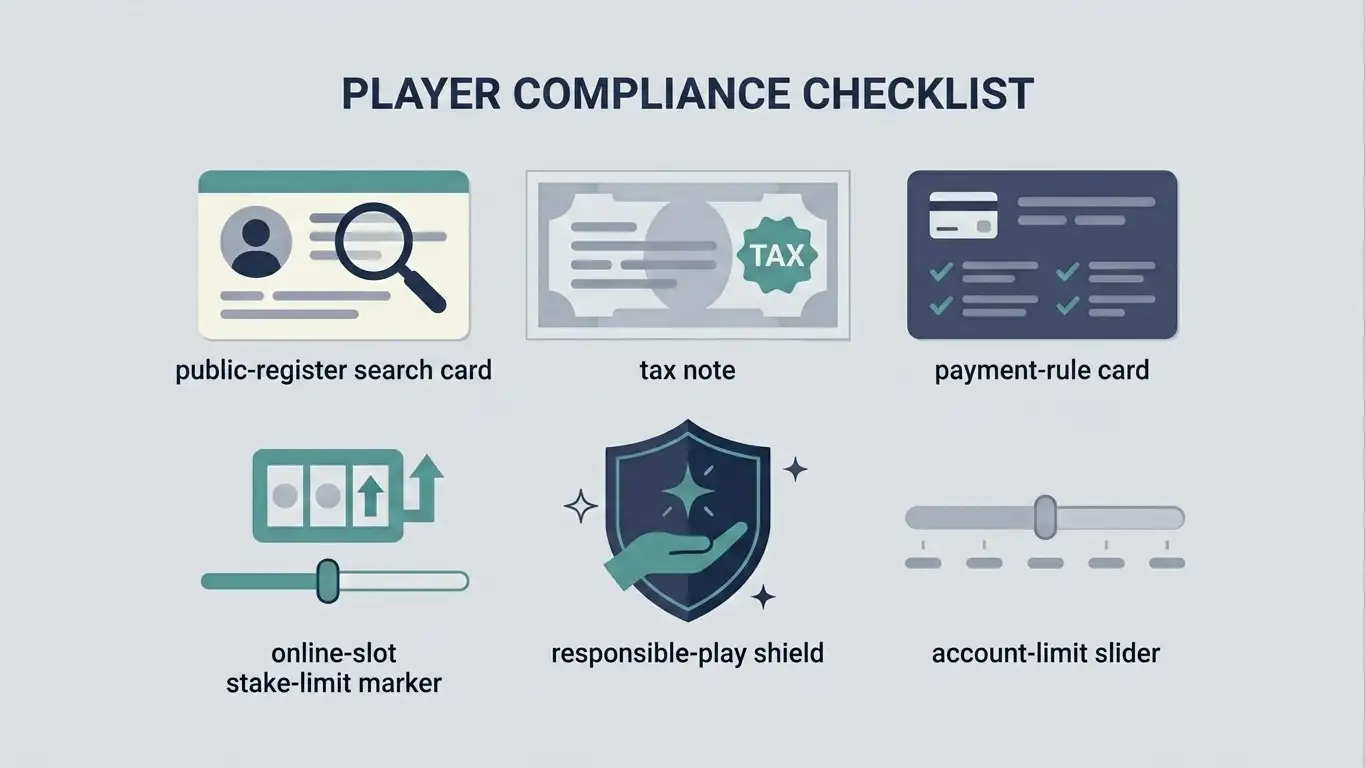
- The five UK checks before you deposit
- 1. UKGC register status comes first
- 2. Remote gambling rules and why visibility is not enough
- 3. UK tax context for ordinary gambling winnings
- 4. UK payment rules: cards, deposits and withdrawals
- 5. Online-slot limits and game design context
- 6. Financial limits and account-control prompts
- 7. GAMSTOP and self-exclusion boundaries
- 8. Advertising, bonuses and social responsibility
- UK decision table for SpinShark
- When to avoid SpinShark
- UK player FAQ
- Source checks used for this page
The five UK checks before you deposit
- Check the UKGC register: search for SpinShark, related trading names and the domain. This guide did not verify a UKGC local licence for SpinShark.
- Read the current terms: SpinShark places responsibility on players to comply with local gambling law and lists GBP, account, payment, KYC and withdrawal rules.
- Apply UK payment context: GB operators cannot accept credit cards for online betting, casino and bingo, and e-wallet gambling funds should not come from credit cards.
- Separate slots from table games: the GB online-slot stake limits apply to online slots, not roulette or blackjack.
- Do not use self-exclusion workarounds: GAMSTOP is the required multi-operator scheme for UKGC-licensed online operators, and this page does not claim SpinShark participates in it.
The detailed licence and trust checks explain the register boundary. The payment methods guide and deposit guide cover the cashier side. Use this page as the local overlay before reading the full SpinShark UK review.
1. UKGC register status comes first
The Gambling Commission public register is the official place to search gambling-business records by business name, trading name, domain name or account number. It includes licence status fields, trading name data, domain name data and regulatory action information. For a UK reader, this matters because a site logo, a Trustpilot page, a promotional page or a visible cashier cannot replace a register entry.
The current editorial position for SpinShark is narrow and direct: no UKGC local licence was verified for SpinShark in the project register check. That means this site must not call SpinShark UKGC-licensed, UK regulated, covered by UKGC local protection, or part of a UKGC complaints route. The finding also does not prove every stronger negative claim someone might make online. It is a register boundary: use it to avoid assuming local licence protections.
What to search
Search the public register by “SpinShark”, possible spacing variants, and the visible domain. If a result appears, check whether the account name, active domain and licence activity match the site you plan to use. If there is no clear match, treat the brand as not verified as a GB local licensee.
2. Remote gambling rules and why visibility is not enough
The Gambling Commission says remote gambling includes internet, app and other remote play, and that a business needs a licence from the Commission if it provides remote gambling facilities to consumers in Great Britain. The same guidance says a business based abroad must have a licence to serve British consumers, using consumers in England, Scotland and Wales as examples.
That rule is the context behind the SpinShark UKGC check. The opened SpinShark terms did not show a general UK or Great Britain account prohibition, and SpinShark pages discuss GBP and UK-facing information. Those points are not the same as a UKGC licence. Visibility and local currency support are operational clues. The register is the licence clue. Keep those columns separate when making a real-money decision.
3. UK tax context for ordinary gambling winnings
HMRC’s business income guidance states that a taxpayer who gambles or places spread bets is not normally carrying on a trade, and that they are not taxable on the profits and do not receive relief for their losses. In plain terms for an ordinary casino player, gambling winnings are generally not treated as taxable trading income, and losing sessions do not create a tax deduction.
That general tax position should not be turned into personal advice. HMRC also separates ordinary gambling from organised trading activity, bookmaker activity, commercial arrangements and other edge cases. SpinShark’s own terms say players are responsible for any taxes, fees or financial obligations that arise under the laws of their country of residence. The safe wording is therefore simple: ordinary UK player winnings are generally outside trading income tax, but complex financial, professional or cross-border situations need independent tax advice.
4. UK payment rules: cards, deposits and withdrawals
SpinShark’s official terms list GBP as an accepted currency and set fiat deposit and withdrawal minimums at 20 GBP/EUR/USD. They also say third-party payments are not accepted, that the casino can check identity before processing payouts, and that any deposit must be wagered three times before funds connected to that deposit are available for withdrawal. Those are brand terms. The UK layer is different: GB gambling operators cannot accept credit cards for online betting, casino and bingo, and e-wallet gambling funds should not be loaded from credit cards.
Do not treat card wording in casino terms as a green light to gamble on credit. Use debit or non-credit options only where lawful and available, keep payment methods in your own name, and read the SpinShark payments and GBP deposit checks pages before depositing.
| Topic | Relevant UK or SpinShark point | What to do |
|---|---|---|
| Credit cards | GB gambling operators are banned from accepting credit cards for online betting, casino and bingo. | Do not fund gambling with credit, including through an e-wallet loaded by credit card. |
| Payment ownership | SpinShark terms reject third-party payments and allow confiscation or refund consequences. | Use only a payment method registered in your own name. |
| Withdrawal readiness | SpinShark can check identity before payouts and hold withdrawals while checks are completed. | Prepare documents before the first withdrawal request. |
| Deposit wagering | SpinShark terms require deposits to be wagered three times before related withdrawal is available. | Do not deposit money you need quickly or cannot afford to put at risk. |
5. Online-slot limits and game design context
GB online-slot stake limits are now part of the local context: £5 for customers aged 25 or over and £2 for adults aged 18-24. The Gambling Commission guidance also states that these limits are for online slots only and do not apply to other casino games such as roulette or blackjack. This is important because SpinShark’s game lobby includes slots, live casino, table games, crash games and jackpots; the local stake-limit rule is not a single limit across the entire casino.
The UKGC’s 2025 remote game-design rules add another safety lens. They restrict features that speed up results or create an illusion of control, ban autoplay, ban audio or visual celebrations of returns less than or equal to stake, restrict operator-led functionality that facilitates multiple simultaneous products such as roulette and blackjack tables, and set a minimum five-second casino-game spin speed outside peer-to-peer poker.
Use this framework when browsing the SpinShark games library. Game choice is a risk-control decision, not only a question of theme, provider or RTP.
6. Financial limits and account-control prompts
From 31 October 2025, online gambling businesses in the UKGC framework must prompt customers to set a financial limit before the first deposit and make it easy to review and alter that limit later. The same update says customers should be reminded every six months to review account and transaction information. These are UK framework standards, not evidence that SpinShark has implemented the same controls.
That distinction is important for a SpinShark UK guide. If a cashier lets you deposit without a clear budget decision, set your own limit outside the site before continuing. Decide the maximum deposit, maximum session length and maximum loss you accept. Then stop when the limit is reached. A limit that changes after a loss is not a limit; it is a delayed chase.
SpinShark’s terms state that cryptocurrency deposit limits cannot be applied to crypto deposits because of the nature of cryptocurrencies, and advise using an alternative method if you wish to set deposit limits for responsible gambling. For UK readers, that is a strong practical warning. Do not choose crypto because it weakens your ability to control spend. Choose the payment route that gives you the most control, or do not deposit.
7. GAMSTOP and self-exclusion boundaries
GAMSTOP is the national online self-exclusion scheme required for Gambling Commission-licensed online operators. The Gambling Commission described the requirement as a way for consumers to self-exclude from online operators with one request rather than each operator individually. This guide does not claim SpinShark participates in GAMSTOP, because no UKGC local licence was verified for SpinShark.
The practical boundary is firm: do not use SpinShark, or any non-verified site, as a way around self-exclusion. If you have self-excluded, are trying to stop gambling, have borrowed money to play, have hidden gambling from someone close to you, or feel an urge to chase losses, the correct decision is not to register. A review page should never frame non-GamStop access as a benefit.
8. Advertising, bonuses and social responsibility
UK gambling advertising rules require gambling marketing to be socially responsible and to protect children, young people and vulnerable persons. The ASA/CAP framework also matters for editorial tone. A UK-facing casino guide should not pressure readers, present gambling as a financial solution, imply that a bonus is risk-free, or make self-control sound like a test of toughness.
That is why this SpinShark UK player guide treats bonuses as terms to understand, not prizes to chase. The welcome offer, free spins and promo-code pages can explain 40x wagering, maximum bonus bet limits, free-spins timing and contribution rates, but they should not override the licence and affordability checks on this page. Start with rules and risk, then decide whether the SpinShark bonus guide is relevant to you at all.
UK decision table for SpinShark
| Signal | What this guide can say | Decision impact |
|---|---|---|
| UKGC local licence | No UKGC local licence was verified for SpinShark. | Do not assume GB licensee protection or GAMSTOP coverage. |
| UK prohibition in opened terms | The opened official terms did not show a general UK or Great Britain account prohibition. | Still check legality, current terms and register status before play. |
| Tax | Ordinary gambling profits are generally outside trading income tax, and losses are not relieved. | Do not treat this as personal tax advice or a safety signal. |
| Payments | Credit-card gambling is banned for GB operators; SpinShark terms include GBP and own-name payment rules. | Avoid credit funding and prepare for ownership checks. |
| Games | GB online-slot stake limits apply to online slots, not roulette or blackjack. | Control stake, speed and session length by game category. |
| Self-exclusion | GAMSTOP applies to UKGC-licensed online operators; SpinShark participation is not claimed. | Do not use the site if you are self-excluded or trying to stop. |
When to avoid SpinShark
A UK rules checklist should produce a clear no-play answer in several situations. Avoid SpinShark if you need a UKGC-verified operator, if a bank or blocking tool is helping you manage gambling, if you are self-excluded, if you need credit to fund play, if you cannot provide identity documents, or if a withdrawal delay would create financial pressure. Also avoid play if the current terms differ from the facts in this guide or if support cannot answer a basic licensing, payment or verification question clearly.
For next checks, use the UKGC status check, deposits and withdrawals guide, verification and withdrawals page and casino game selection overview together.
UK player FAQ
Source checks used for this page
- UKGC register of gambling businesses
- UKGC remote-sector guidance
- HMRC BIM22015 gambling and betting guidance
- UKGC credit-card gambling guidance
- UKGC online slots stake-limit guidance
- UKGC GAMSTOP participation announcement
- UKGC remote game-design rules update
- UKGC financial-limit prompt update
- CAP Code Section 16 on gambling marketing
- Official SpinShark terms and conditions
Written by the editors at Spinshark.